Why I started Catelier
The first note on Catelier: why a tiny eyewear project for cats should be treated with more care than a novelty accessory.
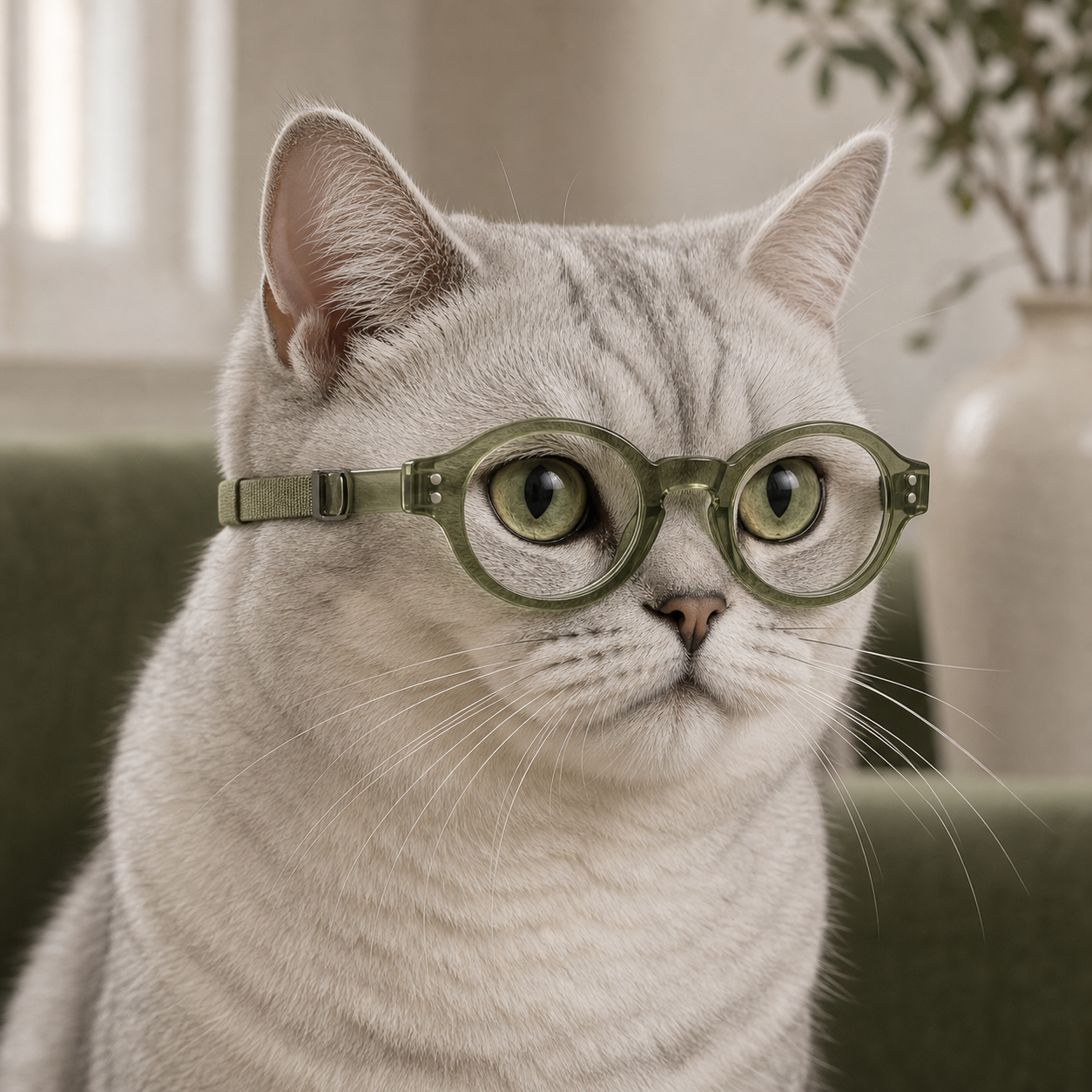
I started Catelier because I could not find the kind of cat eyewear I wanted to exist.
The problem with most cat glasses
The idea began after I bought a pair of glasses for my own cat. They were fun, which was the point, but they were also expensive for what they were: a cheap injection-moulded pair of toy glasses. The shape was amusing. The object itself was not especially considered.
When I looked around, most of what I found had the same problem. Cute idea, toy-level execution. Plastic frames with little attention to proportion, surface, fit, comfort, or the details that make a small object feel properly designed.
That gap stayed with me. I kept thinking there should be a version of this that treated the idea with a bit more seriousness: not a joke-shop prop, and not a claim that cats need eyewear, but a small design object for people who care about their cat, their home, their photographs and the details around them.
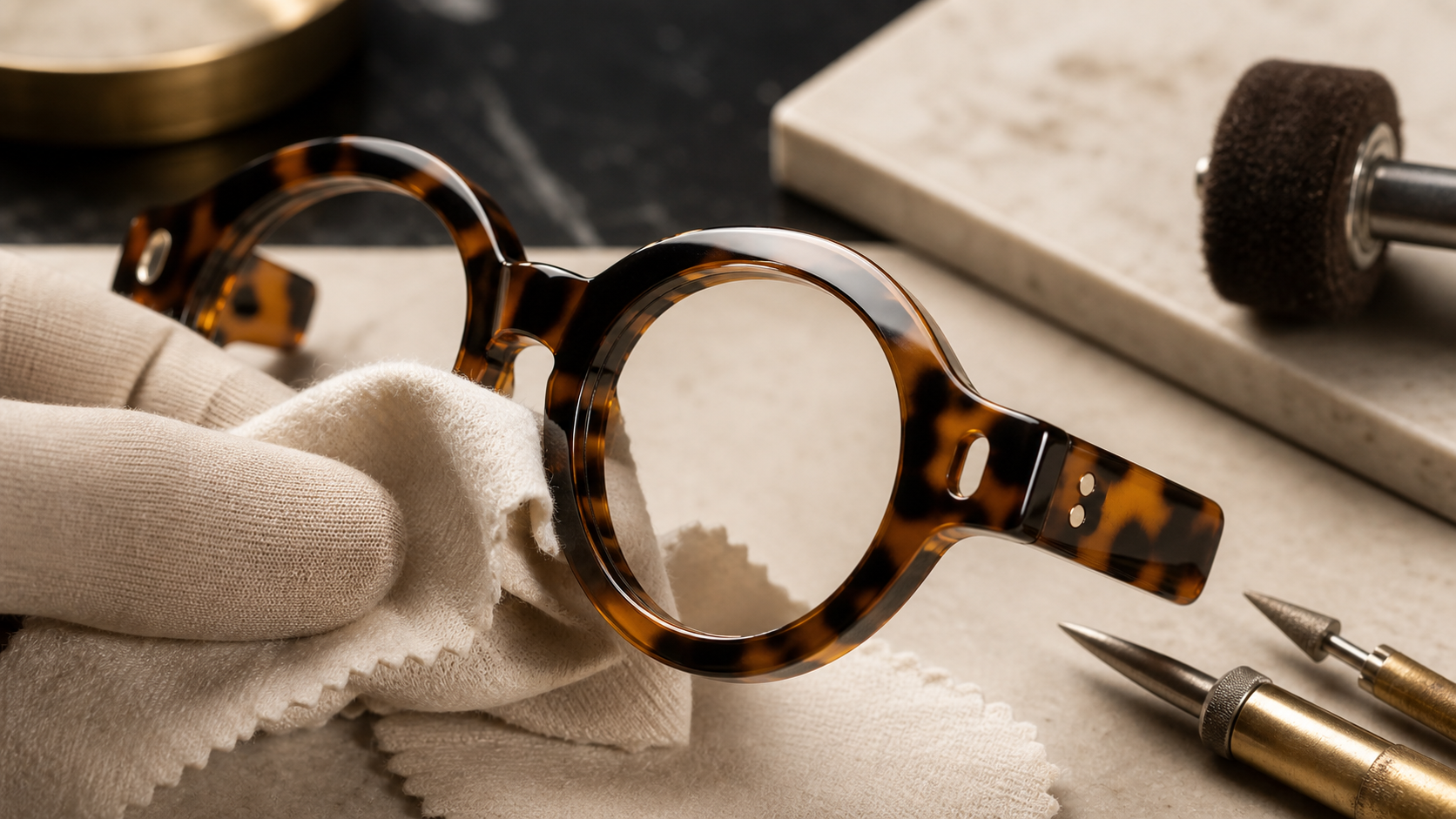
A miniature eyewear house, not a novelty prop
Catelier is my attempt to make that version.
The ambition is simple: designer-inspired concept frames for cats, made with better shapes, better materials, better finishes and a more considered fit. Something closer to a miniature eyewear house than a novelty accessory.
What has to change
The details that matter are the same details that matter in normal eyewear: proportion, edge quality, surface finish, lens shape, colour, weight and how the frame sits on the face. At this scale, small mistakes become very obvious. A frame that is a few millimetres too heavy, too flat, too wide, or too toy-like changes the whole feeling.
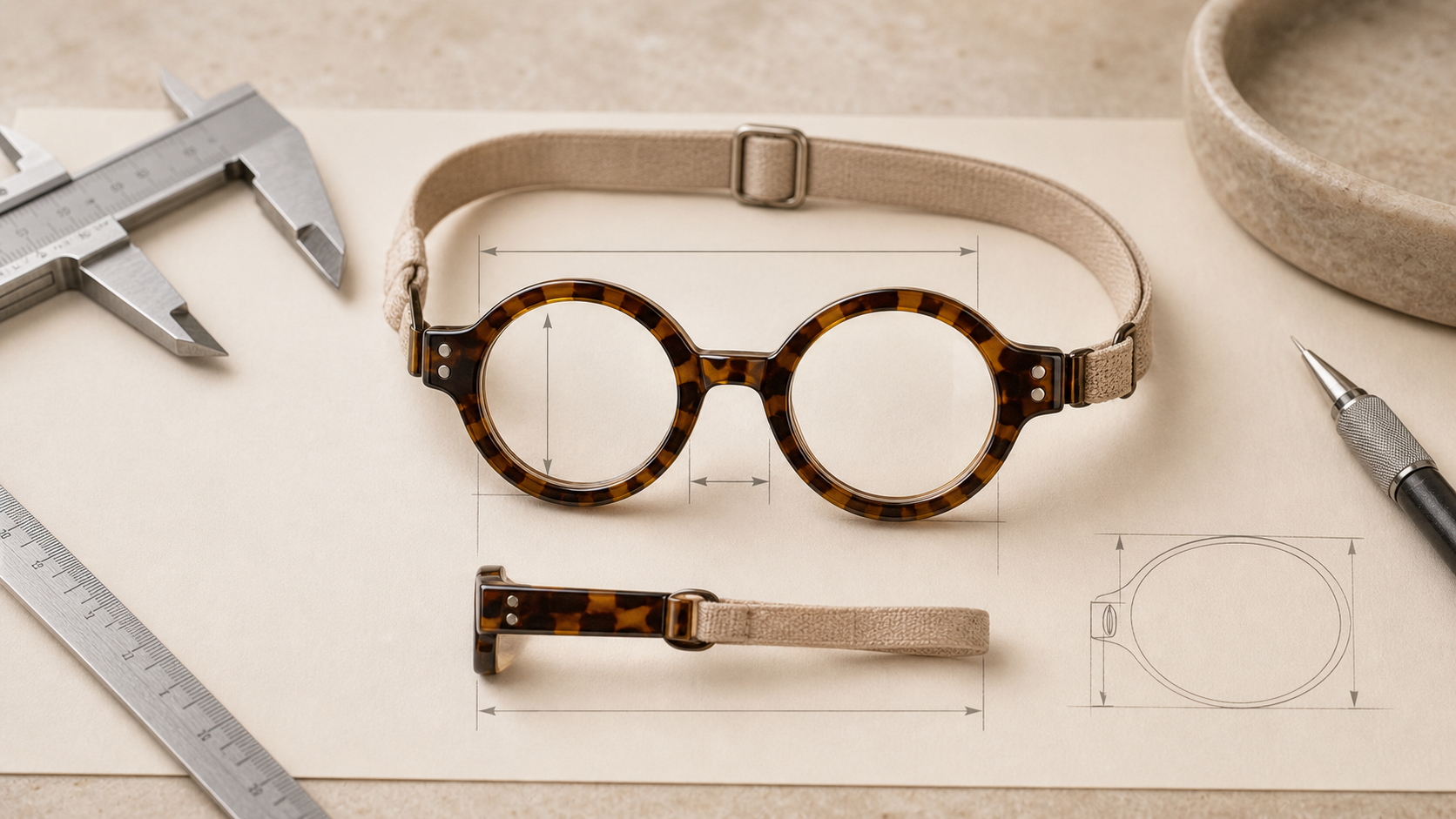
The construction challenge
The construction matters. Catelier frames are being developed around visible short arms on both sides of the frame, with a soft adjustable strap attaching to the rear of those arms and sitting behind the head or upper neck. The point is to avoid human-style temples that hook around the ears, and to keep the design whisker and ear friendly for brief, supervised wear.
That is harder to get right than it sounds. A pair of tiny glasses can become costume-like very quickly. Make the frame too playful and it feels disposable. Make it too close to human eyewear and it ignores the animal wearing it. Make the strap read as a band fixed to the front of the frame and the whole object starts to look wrong.
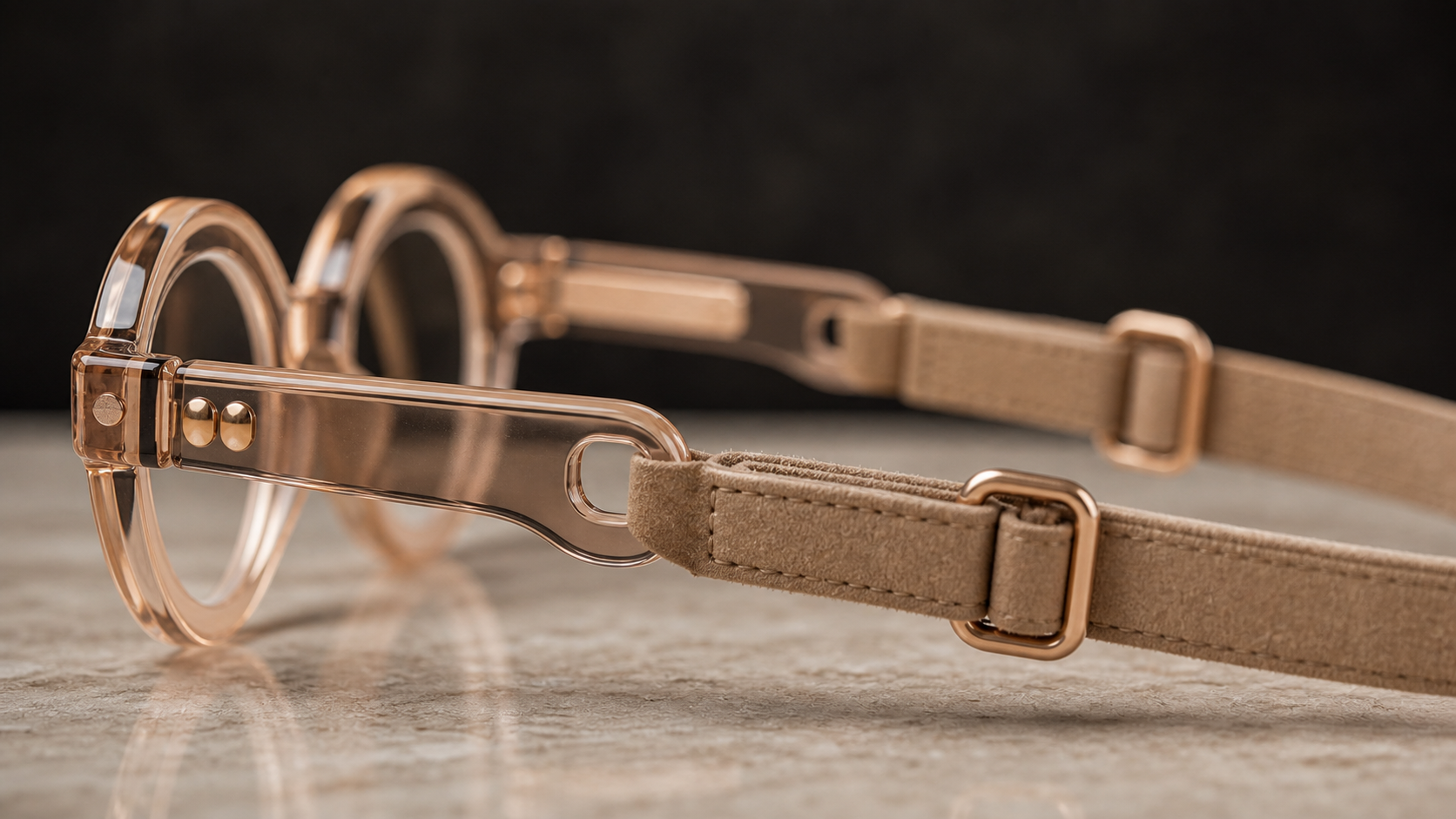
Why the strap has to attach to the arms
The strap is not just a way to hold the frame in place. It is part of the product language. If it attaches directly to the front frame, the glasses start to look like goggles or a headband. If the arms run behind the ears, the design becomes uncomfortable and too close to human eyewear. The short arms are the bridge between those two problems.
They make the object read as glasses first, while giving the strap a logical place to attach.
Where the project is now
This is still early. I am one person developing the idea, working through designs, manufacturers, prototypes, materials and all the small decisions that decide whether something feels cheap or genuinely special.
That is what this journal is for.
It is not just a shopfront. It is where I will share the process of trying to bring Catelier to life, from first concepts and manufacturer conversations through to samples, frame choices, fit tests, launch decisions and, eventually, pre-orders.
Follow the build
If you love cats, style, tiny luxuries, or the idea of proper little frames for the best-dressed cat in the room, follow along.